Reaching the High Andes in Search of One of Peru’s Rarest Birds
Welcome to the third chapter of our Wild Andes Tours series, “Endemics of Lima.” In this series, we spotlight the extraordinary birdlife found only in Peru—and often only within the boundaries of the department of Lima. These species are testaments to the evolutionary richness, isolation, and ecological diversity of our Andean landscapes.
Today, we climb high—very high—into the treeline of the Central Andes to meet one of Peru’s most mysterious and highly prized endemics: the White-cheeked Cotinga.
A Ghost of the High Andes
The White-cheeked Cotinga (Zaratornis stresemanni) is one of the most sought-after birds in the entire Neotropical region. Endemic to the central Peruvian Andes, it occupies a narrow elevational band and is almost always associated with one of the world’s rarest and most threatened habitats: the Polylepis forest.
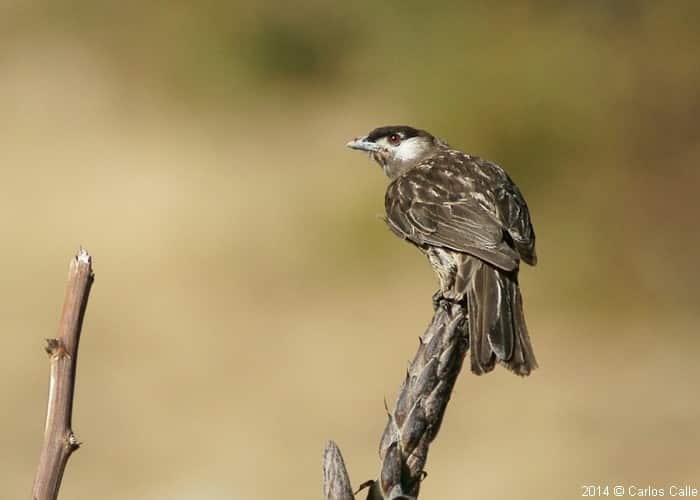
Its soft brown body, distinctive white facial patch, and ruby-red eye make it unmistakable—but spotting one is an entirely different challenge. This species is famously secretive, often perching quietly within dense foliage or feeding discreetly on mistletoe berries high in the canopy.
For many birders, seeing the White-cheeked Cotinga is a genuine lifetime achievement.
Biology & Ecology – A Specialist Among Specialists
The White-cheeked Cotinga has evolved uniquely to survive in the harsh, cold, high-altitude environment where few birds can persist. Some of its defining ecological traits include:
Habitat: Primarily restricted to Polylepis woodlands, a high-elevation, ancient tree genus adapted to extreme cold and intense sunlight
Elevation: Typically found between 3,200–4,000 meters, especially around 3,300 masl in accessible areas of the Santa Eulalia watershed
Diet: Specializes in feeding on mistletoe berries, which grow parasitically on Polylepis—making the tree’s health essential for the species’ survival
Behavior: Usually seen singly or in pairs; generally quiet, slow-moving, and cryptic
Rarity: Classified as Vulnerable, with a small and fragmented distribution
Because Polylepis forests have been heavily reduced over centuries—mostly due to firewood harvesting, overgrazing, and land conversion—the White-cheeked Cotinga is considered a priority species for conservation.