The Many-colored Rush-Tyrant: Lima's Living Jewel of the Reeds
Few birds test a birder’s patience quite like the Many-colored Rush-Tyrant. This sparrow-sized tyrant-flycatcher is often called one of the most colorful small birds in the Americas, yet it spends nearly its entire life hidden inside dense totora reeds, far more often heard than seen. Lima is one of the most dependable places anywhere to track one down, thanks to the freshwater marshes that still survive on the edge of a desert megacity. Our Pantanos de Villa & Pucusana tour regularly turns up this elusive jewel for visiting birders, often within easy reach of the reserve’s boardwalk trails.
A Rainbow Hiding in the Reeds
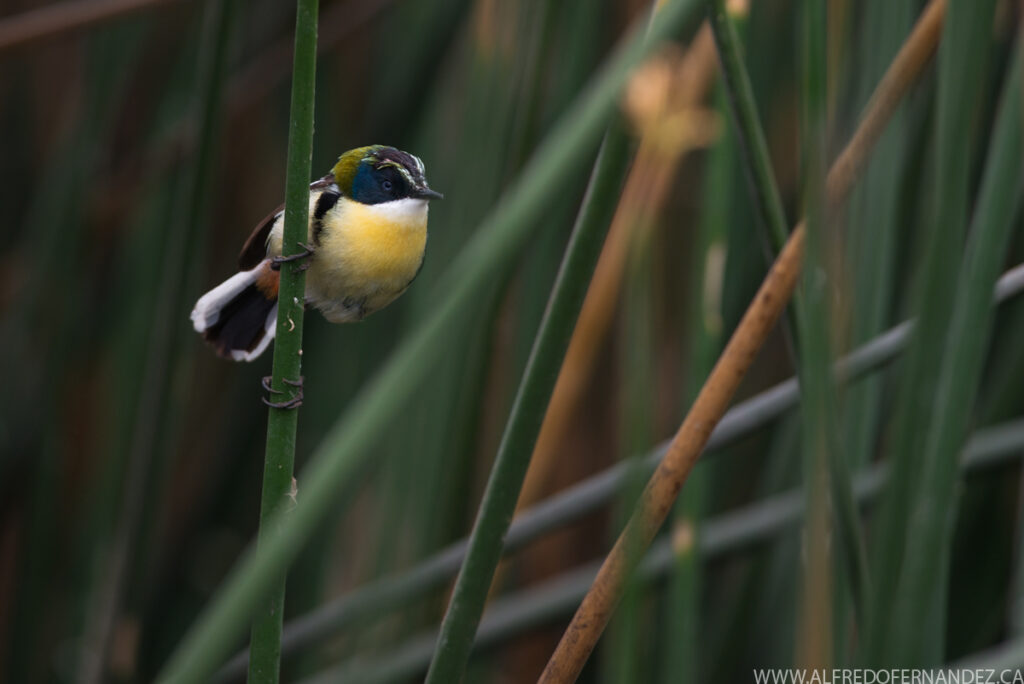
The Many-colored Rush-Tyrant (Tachuris rubrigastra) packs an improbable amount of color into a bird barely 11 centimeters long. Its plumage runs through turquoise, lime green, black, white, and a flash of crimson on the belly, arranged in bold patches rather than subtle gradients. A pale yellow eye and a habit of cocking its short tail upward like a wren give it an alert, almost cartoonish look. Despite the dazzling palette, the bird is a master of disappearing into green reed stands, and most sightings begin with its thin, buzzy call rather than a clean view.
Why Lima’s Wetlands Matter
Lima sits in one of the driest large cities on Earth, yet a handful of coastal wetlands fed by Andean rivers and underground aquifers still support healthy stands of totora reed and cattail. These remnant marshes, squeezed between farmland, highways, and expanding neighborhoods, punch far above their size in biodiversity. For a bird as reed-dependent as the Many-colored Rush-Tyrant, the survival of places like Pantanos de Villa is not incidental scenery, it is the entire habitat that keeps the species present this far north along the coast.
Where to Find It Around Lima
The single best site for the Many-colored Rush-Tyrant in the Lima area is the Pantanos de Villa Wildlife Refuge, a mosaic of lagoons and reed beds just south of the city center. The bird favors the denser, taller stands of totora along the edges of open water, where it forages low and often stays just out of sight. Smaller marshy patches around Pucusana and other coastal wetlands south of Lima occasionally hold the species as well, but Pantanos de Villa remains the most consistent and accessible option, especially when paired with a half-day visit that also covers the nearby coastline.
A Bird That Rewards Slow Birding
Finding a Many-colored Rush-Tyrant is rarely about covering ground quickly. The bird forages methodically, picking small insects and spiders from reed stems and leaf litter, and it tends to stay within a fairly small territory once a pair settles into a productive patch of marsh. The most effective approach is to walk the boardwalk slowly, pause at any opening in the reeds, and listen for its thin, insect-like calls. Patience at a single good vantage point usually outperforms rushing between several mediocre ones.
Sharing the Marsh: Other Wetland Specialists
The same reed beds that hold the Rush-Tyrant also support a strong supporting cast. Wren-like Rushbird and Plumbeous Rail forage low in the vegetation, Common Gallinule and Pied-billed Grebe work the open channels, and Great Grebe and Black Skimmer patrol the larger lagoons. Yellow-hooded Blackbirds add their own splash of color among the reeds, and migratory shorebirds pass through the muddier margins depending on the season. A morning at Pantanos de Villa rarely produces just one target, it tends to deliver a full wetland checklist.
Breeding and Behavior
Pairs of Many-colored Rush-Tyrants are largely sedentary and territorial, defending a stretch of reed bed year-round rather than migrating in and out with the seasons. They build small, well-hidden nests woven into standing vegetation just above the water line, a strategy that keeps eggs and chicks safer from ground predators but leaves the whole population tied to the health of the reeds themselves. Pairs often forage and call in tandem, which is frequently how birders pick up on their presence before ever getting a clean look.
Conservation Pressures on a Shrinking Habitat
The Many-colored Rush-Tyrant is not currently considered globally threatened, but its fortunes in central Peru are tightly linked to wetlands that face constant pressure from urban expansion, pollution, and water diversion. Pantanos de Villa itself is a protected Wildlife Refuge and a Ramsar site precisely because so much of Lima’s original wetland habitat has already been lost to development. Every hectare of healthy reed bed that remains matters disproportionately for a species this specialized, and continued protection of the refuge is essentially the deciding factor in whether the bird stays common here or becomes scarce.
Best Time of Year and Time of Day
The Many-colored Rush-Tyrant can be found at Pantanos de Villa throughout the year, since resident pairs hold their territories year-round. Morning visits tend to be most productive, when activity is highest and the wetland light is softer for photography. The austral spring and early summer months bring added bonus species as migratory shorebirds and other wetland birds pass through, making a single outing even more rewarding for visitors combining a wetland morning with other Lima birding sites.
Photographing a Notoriously Shy Subject
Getting a clean photograph of this species takes more deliberate positioning than most Lima specialties. Because the bird stays low and often partially obscured by reed stems, the best results usually come from waiting quietly at a gap in the vegetation where a pair is known to forage, rather than trying to follow movement through dense cover. A long lens and a bit of luck with the angle of the totora can turn what is often a frustrating chase into one of the most satisfying portraits in a Lima trip report.
Plan Your Wetland Birding Day with Wild Andes Tours
The Many-colored Rush-Tyrant is one of the signature targets on our Pantanos de Villa & Pucusana tour, which combines the wetland’s reed-bed specialists with coastal birding along the nearby shoreline. It also pairs naturally with our broader Birding in Lima and Photography Tours, or with a half-day add-on at Ventanilla Marshes for visitors chasing the full suite of Lima’s wetland birds. Our guides know the current hotspots within the refuge and the calls to listen for, which turns an often-missed bird into a realistic, repeatable sighting. To check availability or build a custom itinerary around Lima’s wetlands, see our full list of tours or get in touch with Wild Andes Tours at sales@wildandestours.com or through our Contact page. A small, colorful bird hiding in the reeds may be the highlight of your entire Lima birding day.
ABOUT WILD ANDES
Welcome to Wild Andes! We offer unforgettable birdwatching and photography experiences for nature enthusiasts. Explore our popular destinations, upcoming tours, and travel alongside expert guides. Let us show you the incredible flora and fauna of Peru!
CONTACT INFORMATION
If you have any questions, or need to request additional details, please do not hesitate to contact us
- +51 946 851 289
- sales@wildandestours.com
- Av. San Martin 617, Lima, Peru
RECENT POSTS
GOOGLE REVIEWS

Copyright © 2026 WILD ANDES . All rights reserved.